
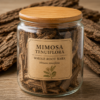
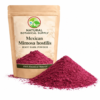
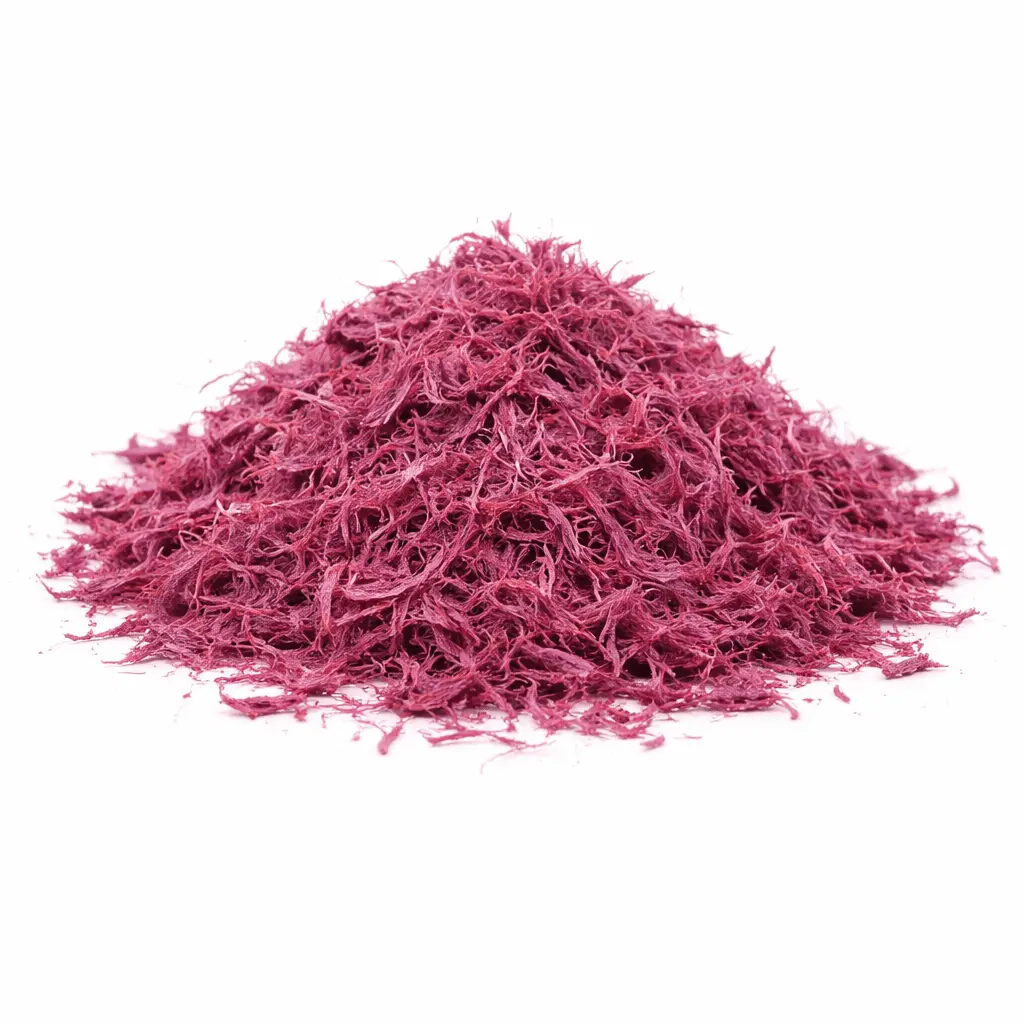
Mexican Mimosa hostilis Inner Root Bark – Shredded
Price range: $130.00 through $500.00
🌿 Mexican Mimosa Hostilis Inner Root Bark – Shredded — uniform inner-bark-only pieces from cultivated Mimosa tenuiflora trees grown in Mexico.
Preserves visible plant structure and fibrous texture while being easy to portion and handle. Supplied as a botanical specimen for natural dye work, herbarium collections, and ethnobotanical reference.
🇲🇽 Mexican origin · Inner bark only · Cultivated sourcing · Additive-free · Not for consumption.
🌿 Mexican Mimosa Hostilis Inner Root Bark – Shredded (MHRB)
This listing is for Mexican-origin shredded inner root bark from cultivated Mimosa tenuiflora trees. The shredded format sits between our whole bark and powder offerings — easier to handle than whole pieces, but less processed than powder, so the natural fibrous structure remains visible.
Mexican Mimosa Hostilis — known locally as Tepezcohuite — grows in the warmer, drier regions of southern and central Mexico. Its inner bark is generally lighter in tone and more uniform in texture than Brazilian material. Shredded Mexican MHRB is a practical choice for buyers who want a middle-ground format that’s easy to work with and stores well.
📋 Botanical Profile
| Attribute | Detail |
|---|---|
| Scientific name | Mimosa tenuiflora (syn. Mimosa hostilis) |
| Common names | Tepezcohuite (Mexico), Mimosa Hostilis, Jurema Preta (Brazil) |
| Family | Fabaceae (Leguminosae) |
| Genus | Mimosa |
| Plant type | Perennial tree or shrub |
| Native range | Southern and central Mexico; broader Latin American range |
| Origin of material | Mexico |
| Plant part | Inner root bark only |
| Form supplied | Shredded — small uniform fibrous pieces |
| Processing | Cleaned, dried, and shredded only — no chemical treatment |
Scientific classification and synonym history are documented in the Royal Botanic Gardens Kew Plants of the World Online database.
🔬 Shredded vs Whole vs Powder — Which Format Is Right?
We supply Mexican Mimosa Hostilis Inner Root Bark in three formats. Each is made from the same source material — the difference is processing.
| Format | Description | Best For |
|---|---|---|
| Whole | Large intact pieces and strips. Minimally processed. | Long-term storage, specimen collections, buyers who process material themselves |
| Shredded | Cut into small uniform fibrous pieces. Visible plant structure preserved. | Dye work, craft applications, easier portioning, good middle ground |
| Powder | Finely milled to uniform consistency. Highest surface area. | Dye baths, precise measurement, research documentation |
Shredded is the sweet spot for many buyers — it’s easier to handle than whole bark, less dusty than powder, and it maintains visible fibrous structure that’s useful for visual verification and documentation.
🇲🇽 Mexican vs Brazilian MHRB — What’s the Difference?
Both Mexican and Brazilian Mimosa Hostilis come from the same species, Mimosa tenuiflora. The differences reflect growing environment and regional harvest practices rather than botanical distinction.
| Characteristic | Mexican MHRB | Brazilian MHRB |
|---|---|---|
| Color | Lighter reddish-brown | Deeper burgundy-red |
| Texture | More uniform, finer fibers | Thicker, more fibrous strands |
| Bark thickness | Slightly thinner | Thicker |
| Best for | Consistent dye results, reference collections | Deeper color dye work, bulk processing |
Neither is objectively “better” — they’re different expressions of the same species. This listing is Mexican origin. If you prefer Brazilian character in shredded form, see our Brazilian Mimosa Hostilis Inner Root Bark – Shredded.
📖 Why Mexican Shredded Inner Root Bark Is Valued
- Easier handling — shredded pieces are simple to portion without the dust of powder or the awkwardness of large whole-bark strips
- Visible structure — the natural fibers remain identifiable, useful for verification and documentation
- Natural dye applications — produces warm reddish-brown to deep burgundy tones on natural fibers like cotton, wool, and linen
- Storage efficiency — compact enough to store efficiently but less prone to degradation than powder
- Ethnobotanical documentation — Tepezcohuite has a long documented history in Mexican traditional plant knowledge
✨ Common Applications
- Natural dye work — warm reddish-brown to burgundy tones on natural fibers
- Herbarium & botanical collections — visible structure for identification and comparison
- Ethnobotanical documentation — labeled Mexican-origin specimens support cultural study
- Botanical education — useful for teaching plant morphology and traditional dye plants
- Craft applications — botanical pigments and plant-based inks
🌱 Quality Characteristics
Our Mexican Mimosa Hostilis Shredded Inner Root Bark is:
- Sourced from cultivated Mimosa tenuiflora trees grown in Mexico
- Made from inner root bark only — no outer bark contamination
- Cleaned, dried, and shredded to uniform fibrous consistency
- Free from additives, fillers, or chemical treatments
- Labeled with botanical name, origin (Mexico), and lot number for traceability
- Hand-inspected to remove debris and damaged pieces
High-quality shredded Mexican MHRB typically shows a warm reddish-brown tone, visible fibrous structure, and a clean, earthy botanical aroma. Natural variation in color and fiber size between batches is expected and reflects growing conditions rather than differences in quality.
📦 Storage Guidance
To preserve quality over time:
- Store in an airtight container away from direct sunlight and heat
- Keep in a cool, dark, dry location
- Add a food-grade silica gel desiccant packet for extended storage
- Handle with clean, dry hands to avoid transferring moisture
- Label with the date received to track storage duration
Properly stored, shredded Mimosa Hostilis Inner Root Bark retains its color, texture, and botanical integrity for well over a year. Shredded bark lasts longer than powder because it has less surface area exposed to air and moisture. For general dried specimen storage guidance, see the Kew Herbarium collection guidelines.
📏 Available Quantities
Available in 1 kg, 2 kg, 3 kg, 4 kg, and 5 kg quantities. Bulk pricing available on request.
⚠️ Compliance Notice
Mexican Mimosa Hostilis Inner Root Bark – Shredded (Mimosa tenuiflora) is sold strictly as a botanical specimen for herbarium collection, botanical education, natural dye work, and ethnobotanical reference purposes only.
It is not intended for human consumption, extraction, or any application prohibited by law. The seller makes no claims regarding medicinal, therapeutic, or psychoactive properties of this material. Buyers are solely responsible for verifying that purchasing, importing, and possessing this plant material is lawful in their jurisdiction before placing an order.
❓ Frequently Asked Questions
What is Mexican Mimosa Hostilis Shredded Inner Root Bark?
It is inner root bark from cultivated Mimosa tenuiflora trees grown in Mexico, cleaned, dried, and cut into small uniform fibrous pieces. Supplied as a botanical specimen for dye work, collections, and ethnobotanical reference.
Is this Mexican or Brazilian origin?
This listing is Mexican origin — sourced from trees grown in Mexico. Mexican MHRB is typically lighter in color and more uniform in texture than Brazilian material.
Is this made from inner root bark or whole bark?
Inner root bark only. The outer bark is removed during processing, giving a cleaner product with consistent color and no outer-bark contamination.
What’s the difference between shredded, whole, and powder MHRB?
Shredded is cut into small fibrous pieces that preserve visible plant structure. Whole is larger intact pieces, minimally processed. Powder is finely milled with the highest surface area. Shredded is a practical middle ground — easier to handle than whole, less dusty than powder, and it retains visible fiber structure.
Does shredded Mexican MHRB work as a natural dye?
Yes. It produces warm reddish-brown to deep burgundy tones on natural fibers like cotton, wool, and linen. Shredded bark works well in dye baths and can also be used for longer cold-water extraction methods.
How should I store shredded Mexican MHRB?
Store in a sealed, airtight container in a cool, dark, dry location away from direct sunlight. Add a silica gel desiccant packet for extended storage. Properly stored, shredded bark retains quality for well over a year.
Do you sell Mexican MHRB in other formats?
Yes. We carry Mexican MHRB in shredded (this listing), whole, and powder form. See the related products section for links.
Is Mimosa Hostilis legal to buy?
Legality varies by jurisdiction. Buyers are responsible for verifying that purchasing, importing, and possessing this plant material is lawful in their location before placing an order.
| Quantity | 1kg, 2kg, 3kg, 4kg, 5kg |
|---|
Be the first to review “Mexican Mimosa hostilis Inner Root Bark – Shredded”
Related products
Mimosa Hostilis Root Bark

Mimosa Hostilis Root Bark

Mimosa Hostilis Root Bark

Mimosa Hostilis Root Bark
Mimosa Hostilis Root Bark

Mimosa Hostilis Root Bark
Mimosa Hostilis Root Bark

Mimosa Hostilis Root Bark
Reviews
There are no reviews yet.